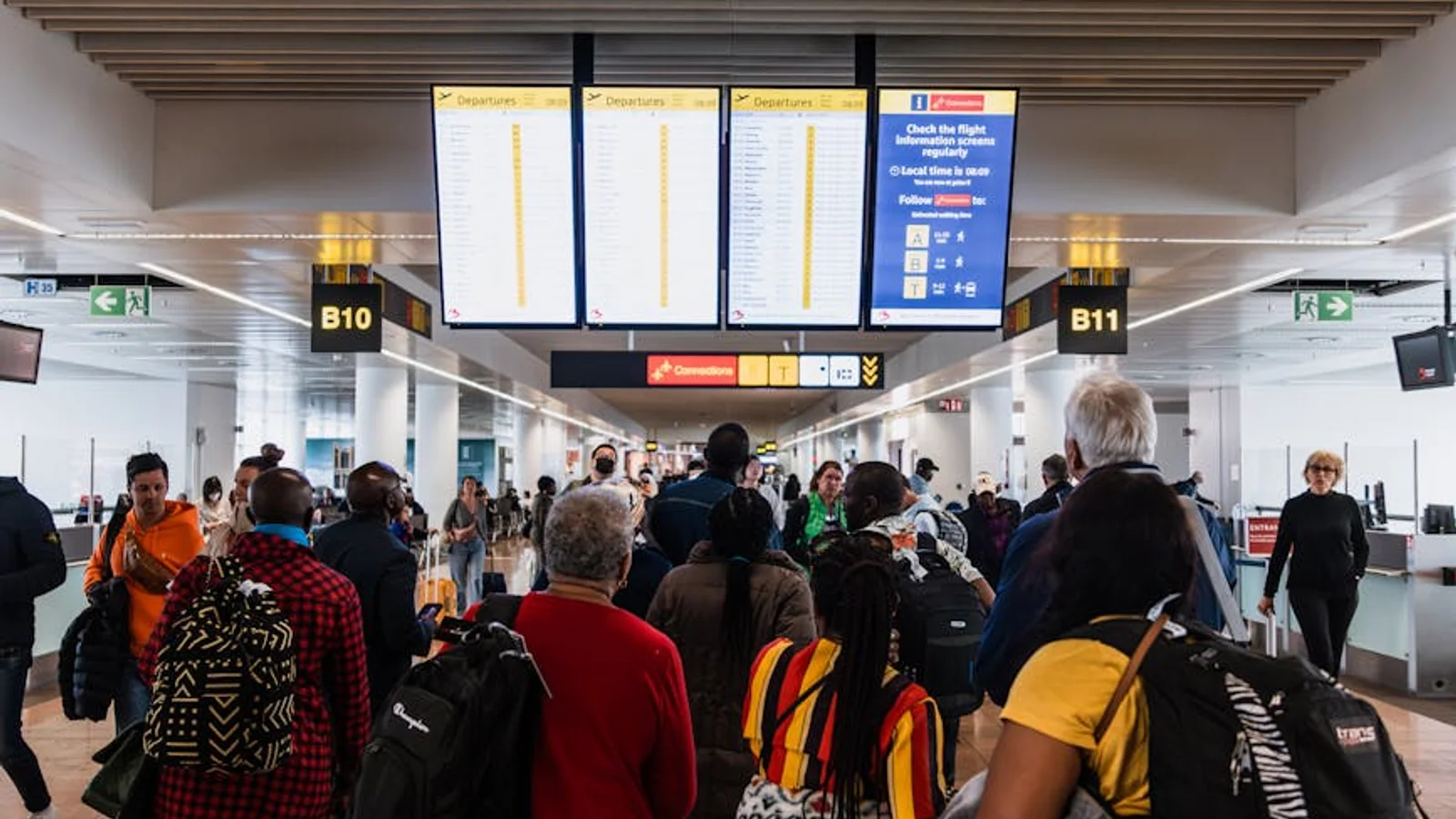
Transfer points concentrate uncertainty. They require passengers to read new information, update their route, and commit to continued movement under time sensitivity. Because of this, transfer decision points often shape terminal stability more than static capacity models suggest. A weak transfer moment can propagate confusion and delay far beyond its footprint.
Why transfers are behaviorally sensitive
At transfer points, the passenger’s need for confidence rises sharply. They are often mid-journey, constrained by timing, and less tolerant of ambiguity than at earlier stages. Small failures in legibility or continuity therefore create disproportionately large stress responses.
This is why transfer moments should be monitored as behaviorally sensitive zones, not merely functional junctions.
- Transfer points combine urgency with high informational demand.
- Ambiguity at transfers can propagate delay into later stages.
- Stable circulation depends on confident transition decisions.
How weak transfer design affects the terminal
Weak transfer design may cause clustering, backtracking, hesitation, or unnecessary staff dependence. These effects then distort nearby circulation and reduce the terminal’s ability to absorb fluctuations smoothly. In complex airports, this can create a wider impression of disorder even when local capacity appears sufficient.
The result is a terminal that underperforms not because of headline volume, but because critical decision points are too fragile.
Using transfer intelligence to improve continuity
Airports can use movement evidence at transfer points to improve directional clarity, sequence information more effectively, and reduce the cognitive burden on passengers at the moment continuity matters most. This supports calmer onward movement and cleaner terminal performance.
In operational terms, stronger transfer design improves both passenger confidence and the airport’s ability to stay stable under pressure.