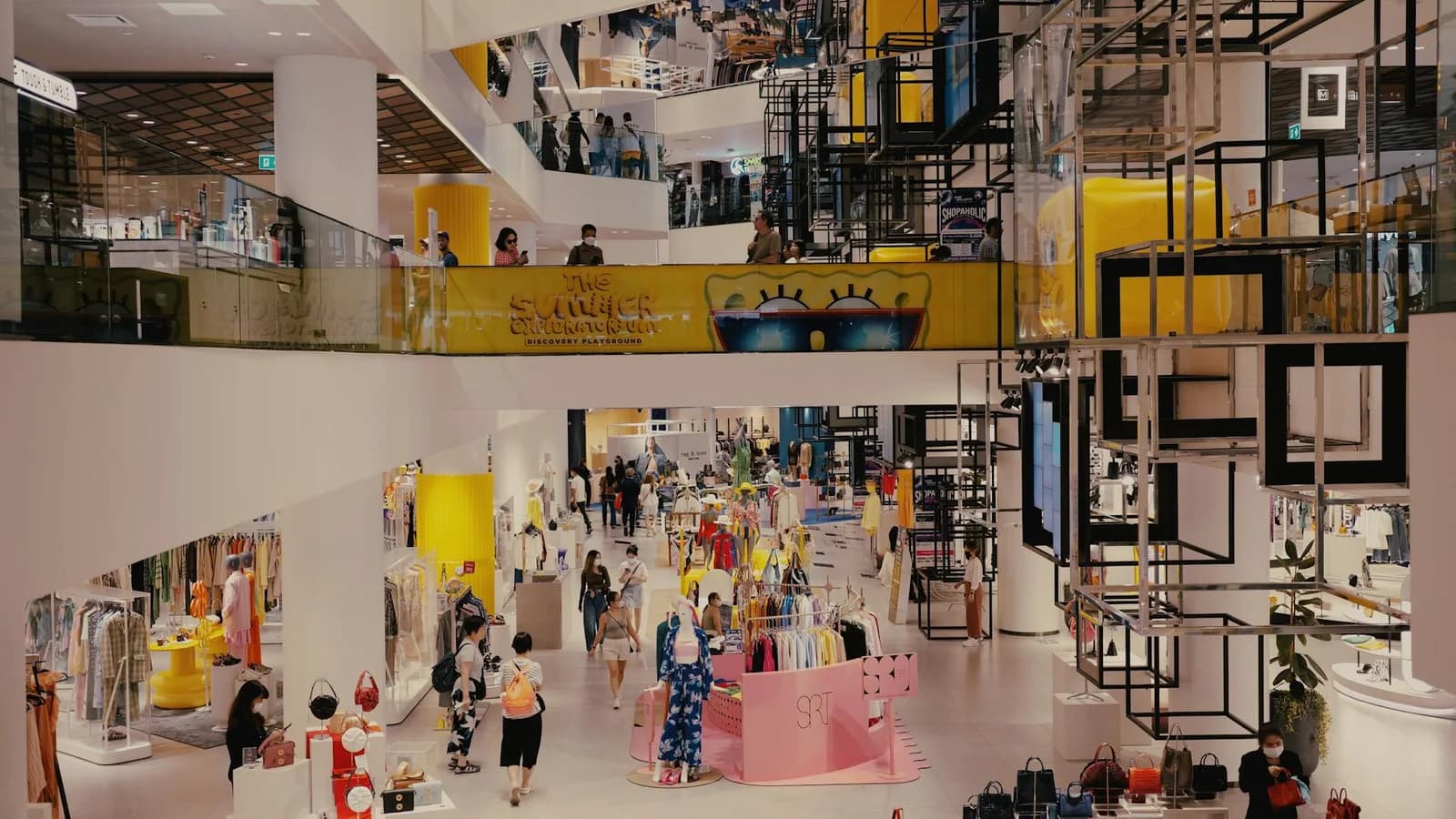
Visitors are more likely to repeat journeys that feel coherent. In large malls, circulation can become visually impressive but behaviorally exhausting if it lacks a sense of completion. A mall loop should not feel endless or directionless. It should feel legible, rewarding, and finishable, with enough confidence along the way that visitors remain willing to continue and return in the future.
Why finishable journeys matter
People repeat experiences they can mentally organize. If a mall’s circulation feels sprawling, repetitive, or hard to close out, the visitor may still complete the trip but leave with less appetite to repeat the same path. This weakens repeat visitation confidence in subtle ways that are difficult to see in raw traffic alone.
A finishable journey does not mean a short journey. It means a route that feels structured enough for people to believe their effort will be rewarded and their onward choices remain manageable.
- Legibility supports confidence even in large-format centers.
- A strong loop creates both exploration and closure.
- Return visitation depends partly on remembered route comfort.
How poor loop design erodes commercial energy
When loop design is weak, visitors may duplicate paths unnecessarily, retreat to familiar anchors, or stop exploring earlier than intended. This shortens exposure to secondary space and reduces the commercial reach of the center. Over time, the mall becomes easier to use narrowly than fully.
That is why loop quality has real leasing implications. It shapes how far demand is willing to travel and how much of the asset gets emotionally included in the visit.
Designing loops around confidence, not geometry alone
The best mall teams evaluate loops by continuation behavior, revisit comfort, and the clarity of onward decisions, not only by architectural symmetry. They ask whether the loop feels worth finishing, whether it supports return planning, and whether it allows multiple visit styles without confusion.
When circulation is designed this way, the mall becomes easier to repeat, easier to monetize broadly, and easier for tenants to trust as a complete commercial system.