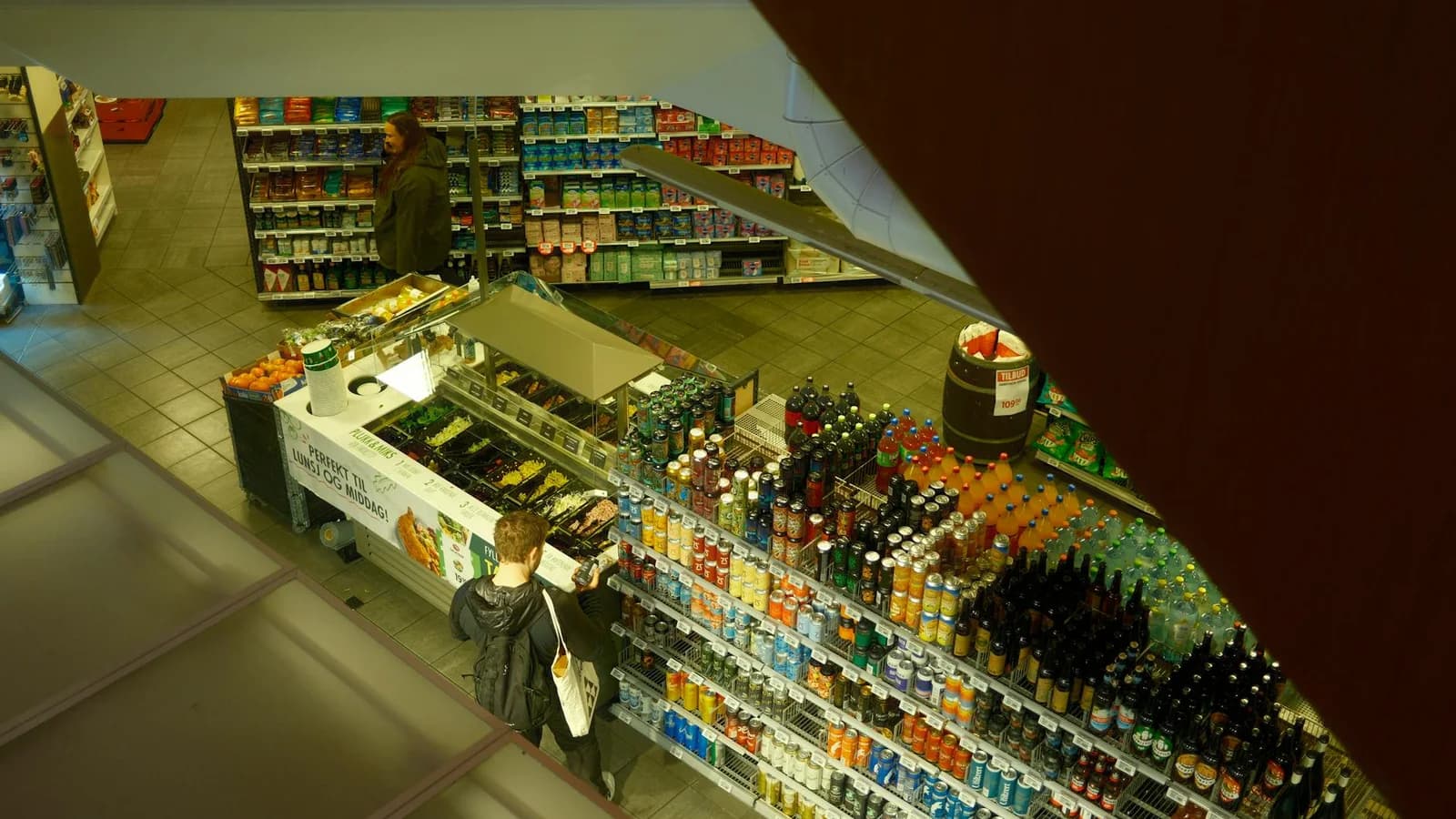
Space design decisions are too often made from static assumptions. Teams rely on planograms, architect intent, or the opinions of whoever has walked the site most recently. Heatmap-driven optimization changes that by showing where people actually spend time, where they hesitate, and which zones fail to attract productive attention.
Why layouts underperform even when they look correct on paper
Many underperforming layouts are not obviously broken. They are simply misaligned with real human behavior. A display may be technically visible yet miss the natural line of travel. A service point may be logically placed yet create subtle blockage. A transition zone may feel open in design drawings but function as a hesitation point in live use.
Movement heatmaps expose these mismatches quickly. They show whether the intended journey is actually being used and whether the space is supporting forward progression or silently producing friction.
What density patterns actually tell the business
Dense zones are not automatically strong zones. A hotspot may indicate productive engagement, but it can also point to confusion, congestion, or a bottleneck. Likewise, a cold zone is not always wasted space; it may simply need a different functional role or a redesigned adjacency to become valuable.
That is why heatmaps work best when combined with journey interpretation. The question is not just where people were. It is whether the density pattern supported the business objective of that zone.
Using evidence to redesign with confidence
When teams can see repeated density patterns over time, they stop redesigning from intuition alone. They can test whether a fixture move redistributed attention, whether a queue barrier reduced spillover, or whether a new focal point changed the speed of entry decisions. These are controlled improvements, not aesthetic experiments.
For enterprise operators, the value is repeatability. A layout insight from one site becomes more than a local anecdote when it can be compared against similar formats elsewhere. That is where spatial analytics becomes a scalable design discipline.