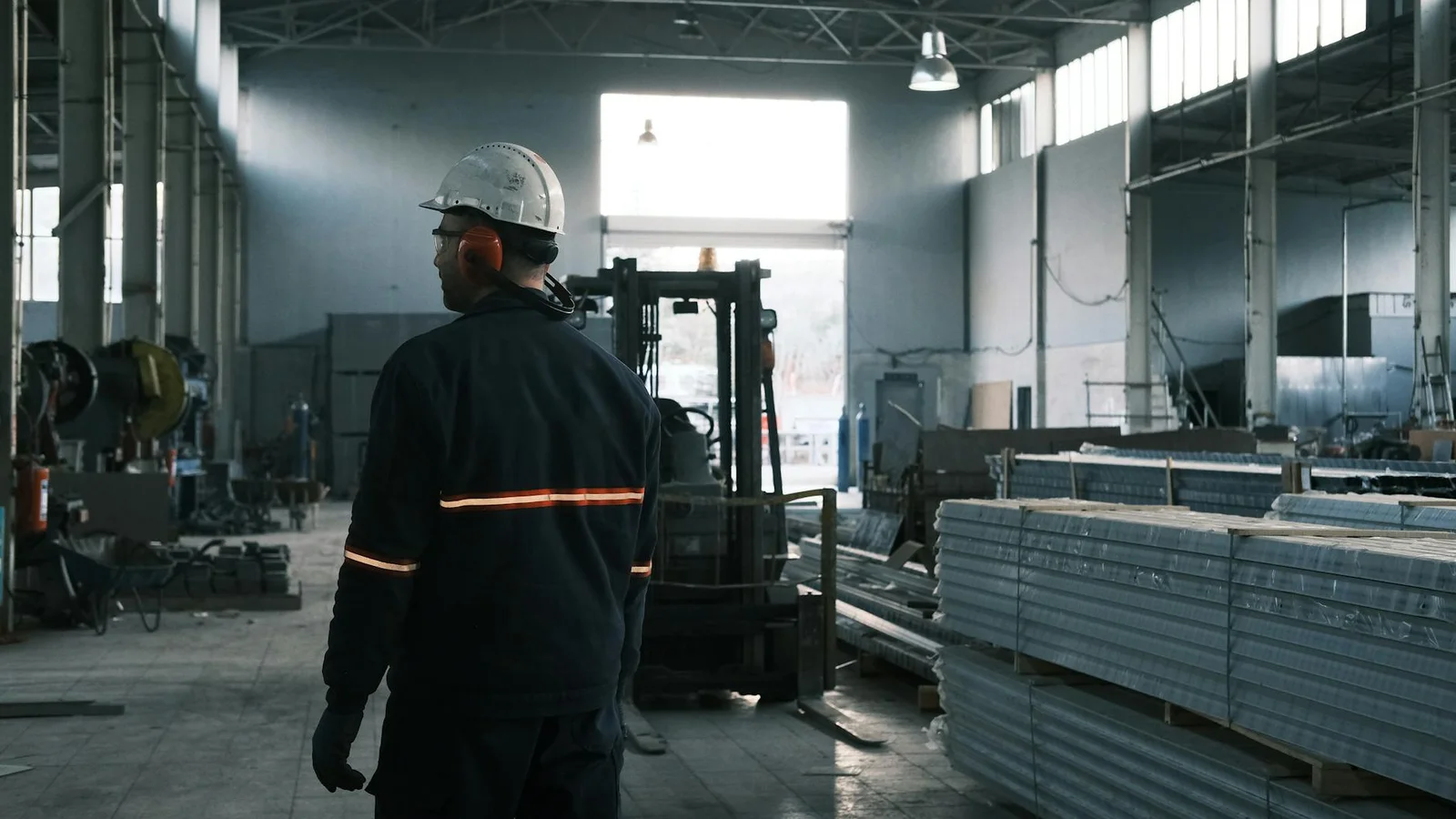
Crossings are small governance systems embedded in the floor. When priority is clear, behavior becomes smoother and more predictable. When priority is vague, workers and vehicle operators must negotiate in real time, which increases hesitation and reduces rhythm. In manufacturing, that difference shapes both safety and performance.
Why ambiguity at crossings spreads outward
Unclear priority does not remain local to the crossing. It affects how people approach the next crossing, how much trust they place in the environment, and how aggressively or cautiously they move through the site. The floor becomes behaviorally noisier because the rules are not being carried by the environment itself.
This makes crossing design more consequential than it first appears.
- Crossing ambiguity increases negotiation behavior.
- Negotiation behavior slows flow and weakens confidence.
- Clear priority creates calmer and more repeatable movement patterns.
What good priority design does
Good priority design reduces the need for interpretation. It makes right-of-way, visibility, and continuation easier to read so that both pedestrians and equipment operators can act confidently with fewer corrections. This is not just safer; it is operationally cleaner.
On busy floors, those small reductions in uncertainty create meaningful gains in rhythm and consistency.
Why this matters across the whole plant
The plant-wide benefit comes from repetition. Every clearer crossing lowers a little friction, a little hesitation, and a little coordination burden. Over time, these gains accumulate into an environment that is easier to trust and easier to operate under pressure.
That is how small movement design decisions become large operational advantages.