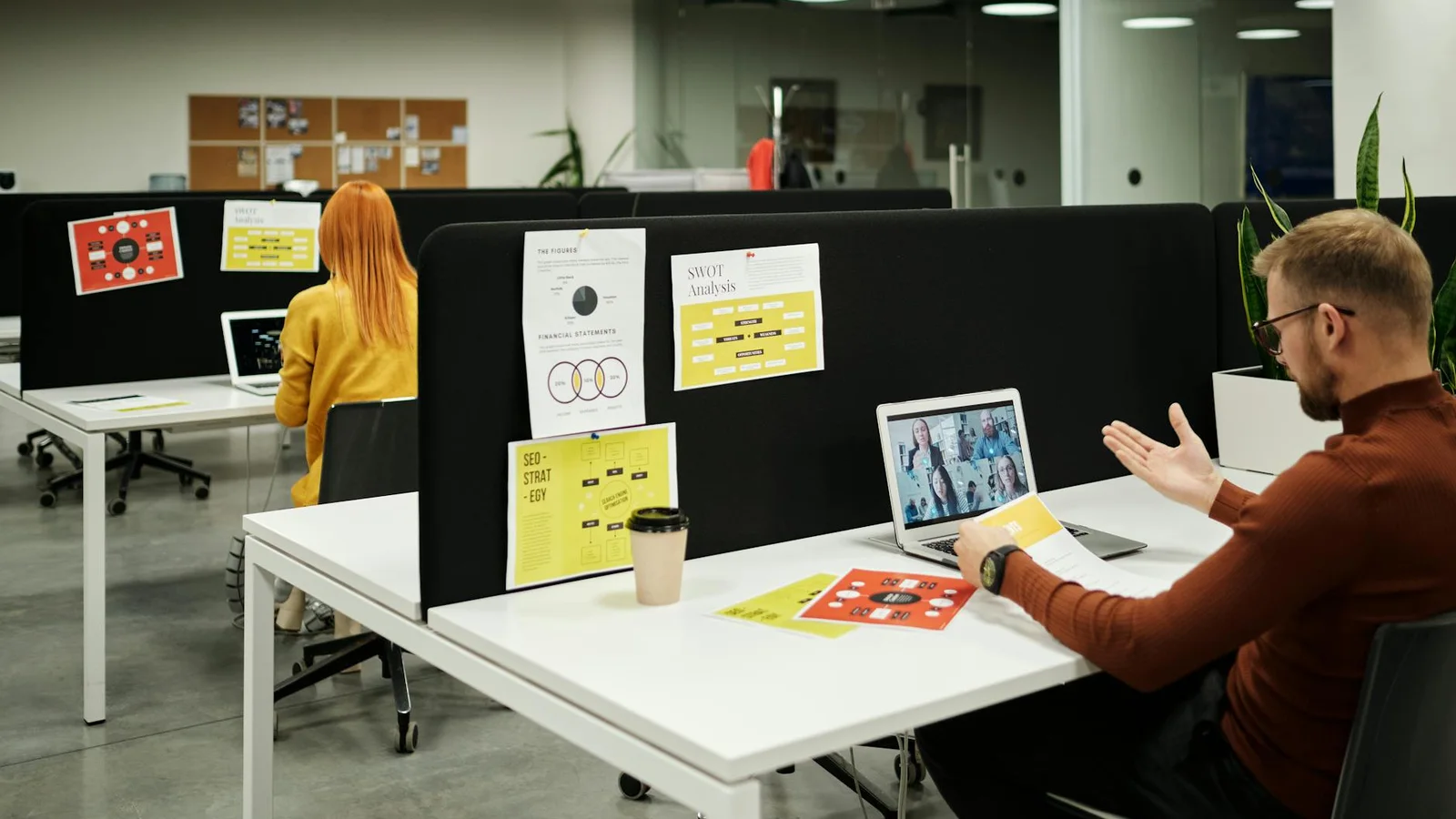
Office leaders often blame meeting-zone pressure on total occupancy, but the timing pattern of arrivals usually explains much more. When people enter, settle, and converge on similar collaboration spaces at the same moment, overload forms quickly even if the building is not full. That means arrival rhythm is a planning variable, not just an HR curiosity.
Why synchronized demand overwhelms shared zones
Meeting zones and informal collaboration areas are sensitive to synchronized behavior. If multiple teams begin the day on the same cadence, the office experiences local overload even while other spaces remain underused. Headcount alone cannot explain that distortion.
Understanding rhythm gives workplace teams a better way to interpret pressure hotspots and redesign the daily pattern.
- Meeting pressure can be rhythmic before it is volumetric.
- Synchronized arrivals create local congestion faster than average occupancy suggests.
- Arrival rhythm should influence how collaboration zones are planned and managed.
What overload looks like in practice
Overload appears as delayed settling, more opportunistic room capture, spillover into circulation areas, and visible competition for informal collaboration space. These conditions make the office feel less composed and less usable even when utilization metrics appear acceptable.
That is why rhythm-sensitive planning is becoming more important in hybrid workplaces.
How operators can respond
Corporate workplace teams can respond by shaping arrival windows, diversifying early-day collaboration options, and clarifying when certain zones are meant for fast coordination versus deeper session work. This reduces synchronized pressure without reducing flexibility.
The practical objective is an office that absorbs collaboration demand more evenly across the day.