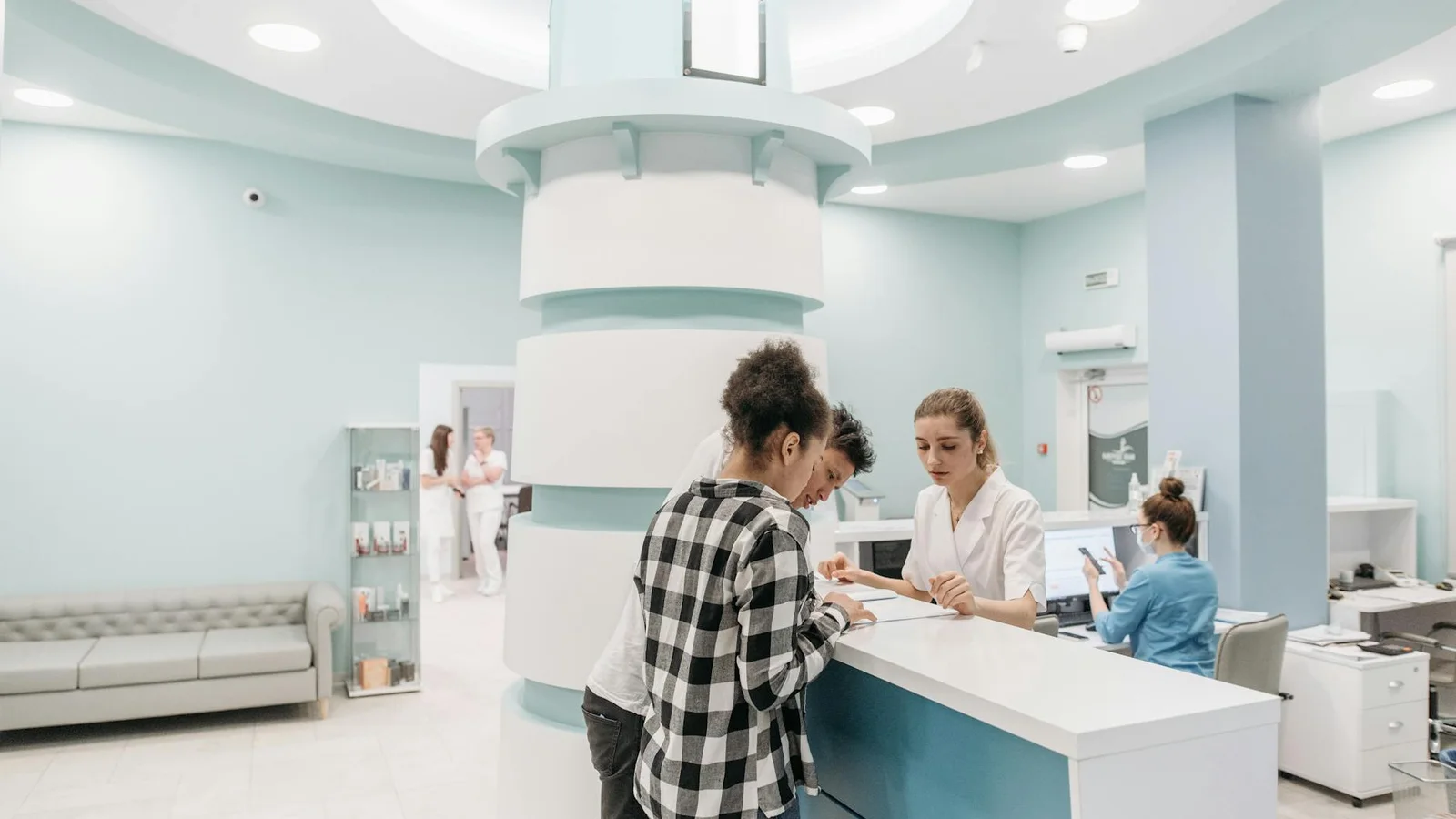
Outpatient environments are often measured through schedules, throughput, and capacity utilization. Those indicators matter, but they do not fully describe how the patient journey is actually behaving on the ground. Movement and wait experience fill that gap. They reveal whether the clinic feels understandable, stable, and trustworthy at the level patients and staff actually experience.
Why wait experience is more than a comfort issue
Patients interpret waiting as a signal about the reliability of the environment. If the process feels opaque or disorderly, confidence weakens even when clinical throughput remains nominally on target. This affects both perception and behavior. Patients may ask for more reassurance, create more interruptions, or become harder to route smoothly through the next stage.
That is why wait experience should be treated as an operational input, not just a patient-satisfaction outcome.
- Unclear waiting conditions increase perceived instability.
- Movement uncertainty can increase staff interruption and coordination load.
- A calmer journey improves both patient confidence and operational rhythm.
What movement behavior reveals in outpatient settings
Movement patterns show whether the environment supports clear progression or repeated uncertainty. Clustering, hesitation near handoff points, and repeated requests for direction often signal that the process feels harder than the schedule suggests. These signs are especially important in high-volume settings where small frictions scale quickly.
By observing these behaviors, healthcare teams can identify where the patient journey needs structural support rather than simply more reassurance at the point of frustration.
Operational benefits of a clearer patient journey
A clearer outpatient journey reduces avoidable confusion, stabilizes waiting behavior, and helps resources stay aligned with actual demand pressure. It also improves the environment for staff because fewer micro-disruptions are required to keep the flow coherent.
In practice, this means better patient confidence and better operational stability at the same time, which is exactly what busy outpatient environments need.